


Dot Grid vs Lined vs Blank: Finding the Right Kind of Planner
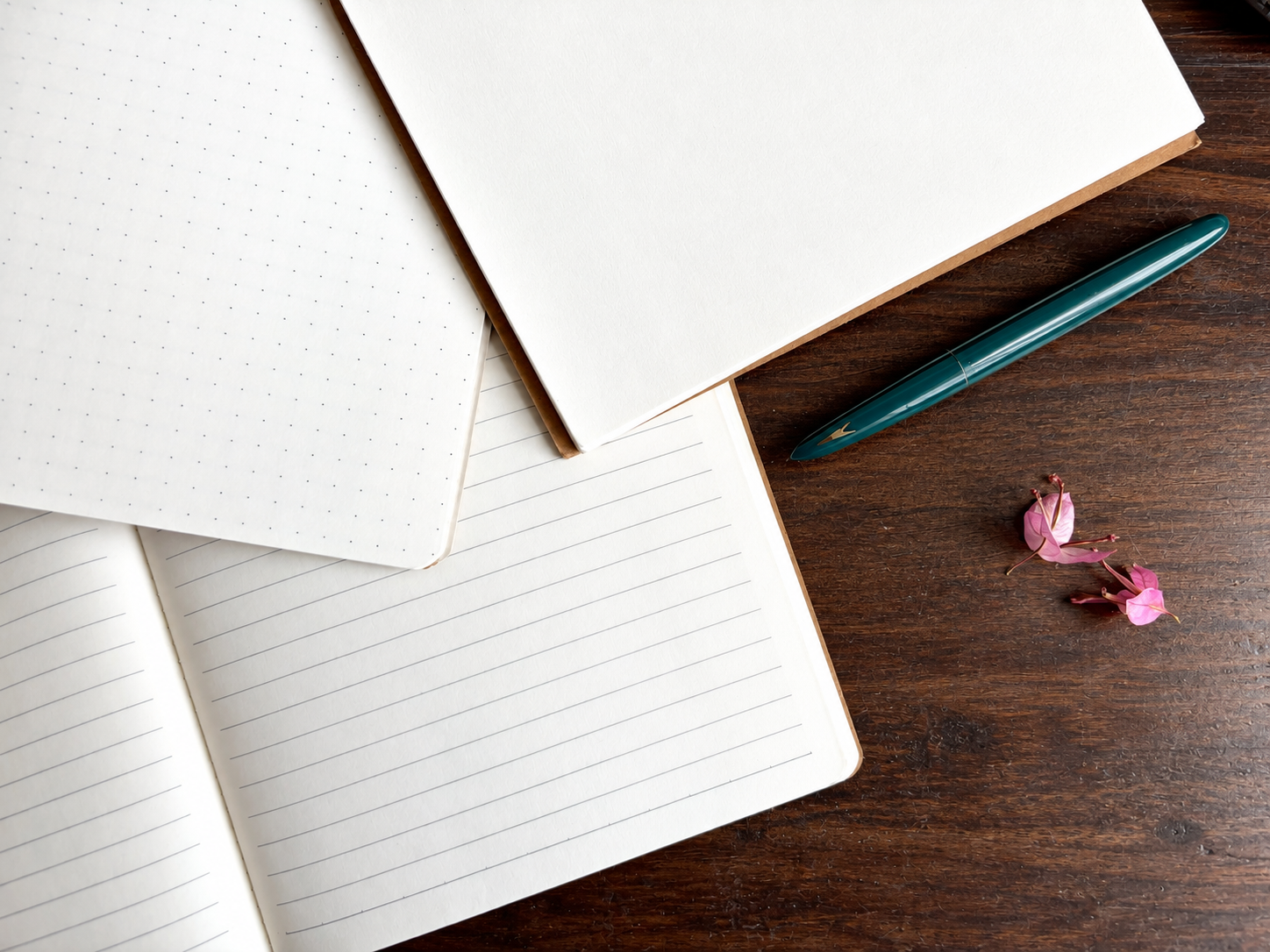
There is something lovely about a fresh page.
Before we write anything on it, it holds possibility. A thought we haven’t quite formed yet. A sentence that may lead somewhere unexpected. A list we need to get out of our head. A drawing that may turn into something, or may simply remain a few lines on paper.
A page is, in many ways, a landing place for our thoughts.
We don’t always know what we are going to put there when we sit down. Sometimes writing helps us discover what we think. Sometimes it helps us remember. Sometimes it is simply a way of getting something out of our heads and somewhere we can see it.
And the page quietly participates in all of this.
The way it is laid out can make us feel more contained, more open, more organised or more free. A line gives the eye somewhere to travel. A blank page leaves the direction entirely to us. A grid offers a structure we can work within. Dots suggest a structure without insisting on one.
None of these is inherently better.
They simply create different kinds of space.
And perhaps that is a more useful way to think about the familiar question of dot grid vs lined vs blank. Not as a competition between notebook layouts, but as a question of what kind of relationship we want to have with the page.
The page as a place for thoughts to land
Writing rarely arrives in a perfectly organised form.
A thought might begin as a sentence, become a question, turn into a list and then wander somewhere completely different. We might sit down intending to write about one thing and discover that something else has been occupying our mind.
The page makes room for this.
There is something reassuring about putting a pen to paper and knowing that nothing has to be figured out before we begin. The page can hold the unfinished thought, the crossed-out sentence, the idea we return to three pages later.
Perhaps that is why the physical qualities of a notebook matter more than we sometimes realise.
A page can feel inviting or intimidating. It can gently guide us or leave everything open. It can give us enough structure to begin without making decisions for us.
The best kind of page doesn’t necessarily tell us what to write.
It gives us somewhere to start.
Lined paper: when writing has a rhythm
Lined paper is familiar for a reason.
There is comfort in seeing those quiet horizontal lines waiting across the page. They give our handwriting a rhythm and make it easy to settle into longer stretches of writing without thinking too much about where the words should go.
For journaling, notes, letters, lists and everyday writing, lined paper can feel almost instinctive. We know what to do with it. We begin at the top and allow our thoughts to move down the page.
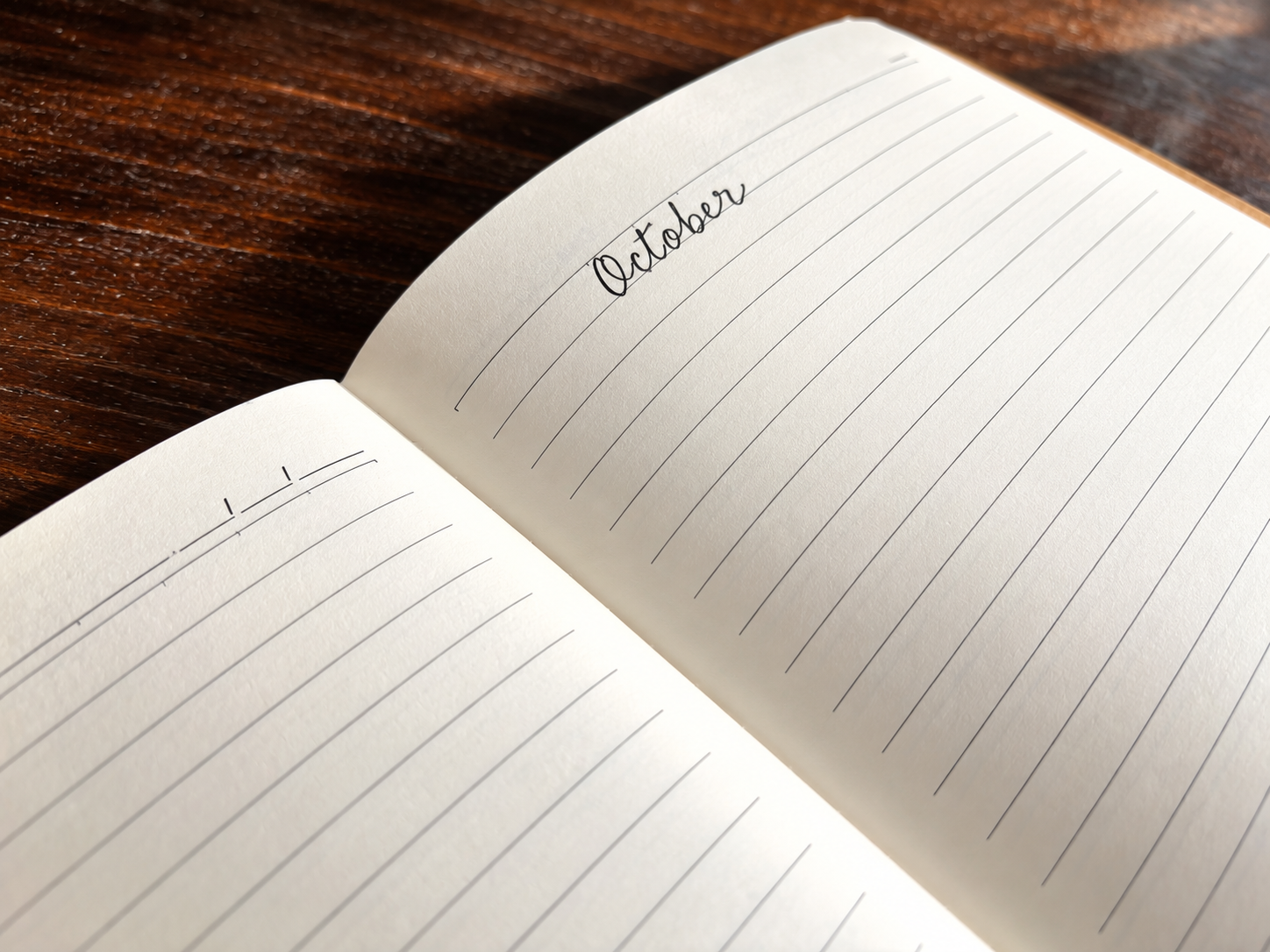
There is something reassuring about that simplicity.
The lines create a gentle boundary around the writing. They help us keep our thoughts in a certain rhythm, one sentence following another. When we have a lot to say, that can be exactly what we want.
But lines do quietly suggest a particular way of using a page.
They imply direction. They encourage words. They give us a sense of where the beginning and end of a piece of writing might be.
That isn’t a limitation. In fact, sometimes a little direction is comforting.
When the purpose of sitting down is simply to write, the line can almost disappear beneath the words.
It becomes part of the background.
Blank paper: when nothing is decided for you
Then there is the blank page.
It can feel wonderfully open.
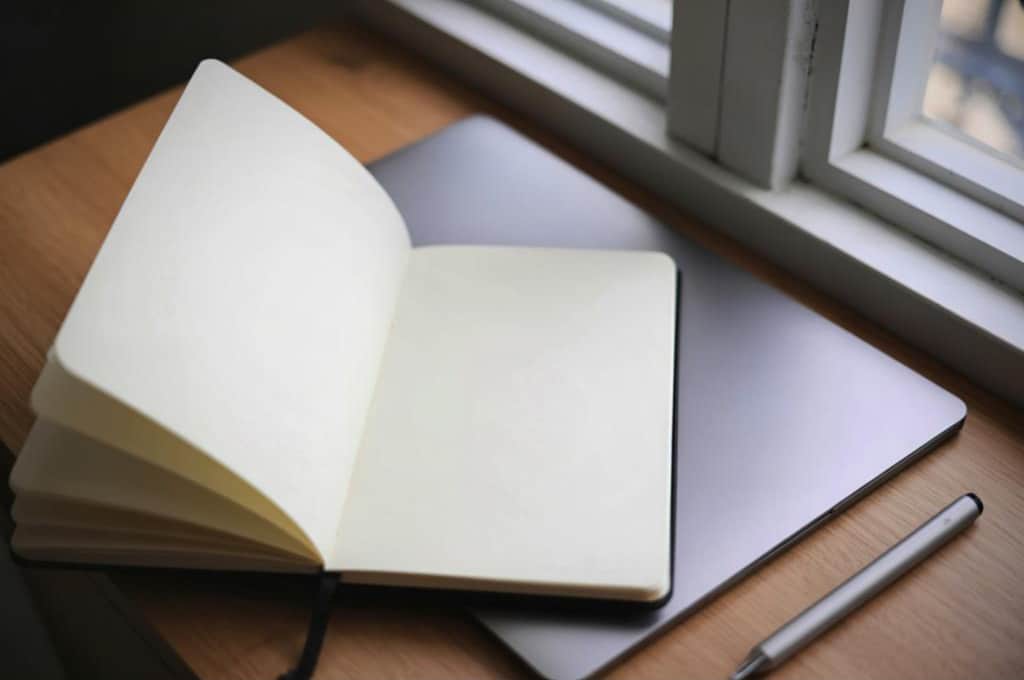
There are no lines to follow and no structure to work around. A sentence can sit in the middle. A sketch can begin in a corner. Words can move across the page. A diagram can take shape beside a paragraph. The page can become whatever we need it to be.
For anyone who likes to begin without knowing exactly where something is going, blank paper offers a particular kind of freedom.
It doesn’t assume that every thought will arrive in a neat row.
But complete freedom can sometimes be its own small challenge.
We have all had that moment of opening a beautiful blank notebook and hesitating before putting the first mark on the page. When everything is possible, it can be surprisingly difficult to decide where to begin.
The blank page asks us to create the structure ourselves.
For some people, that is precisely the appeal. For others, a little guidance makes it easier to get started.
And that is worth remembering when we talk about the different types of notebook paper. The question isn’t really which layout gives us the most freedom.
Sometimes freedom feels like having no boundaries.
Sometimes it feels like having just enough structure that we don’t have to think about the boundaries at all.
What about square grid paper?
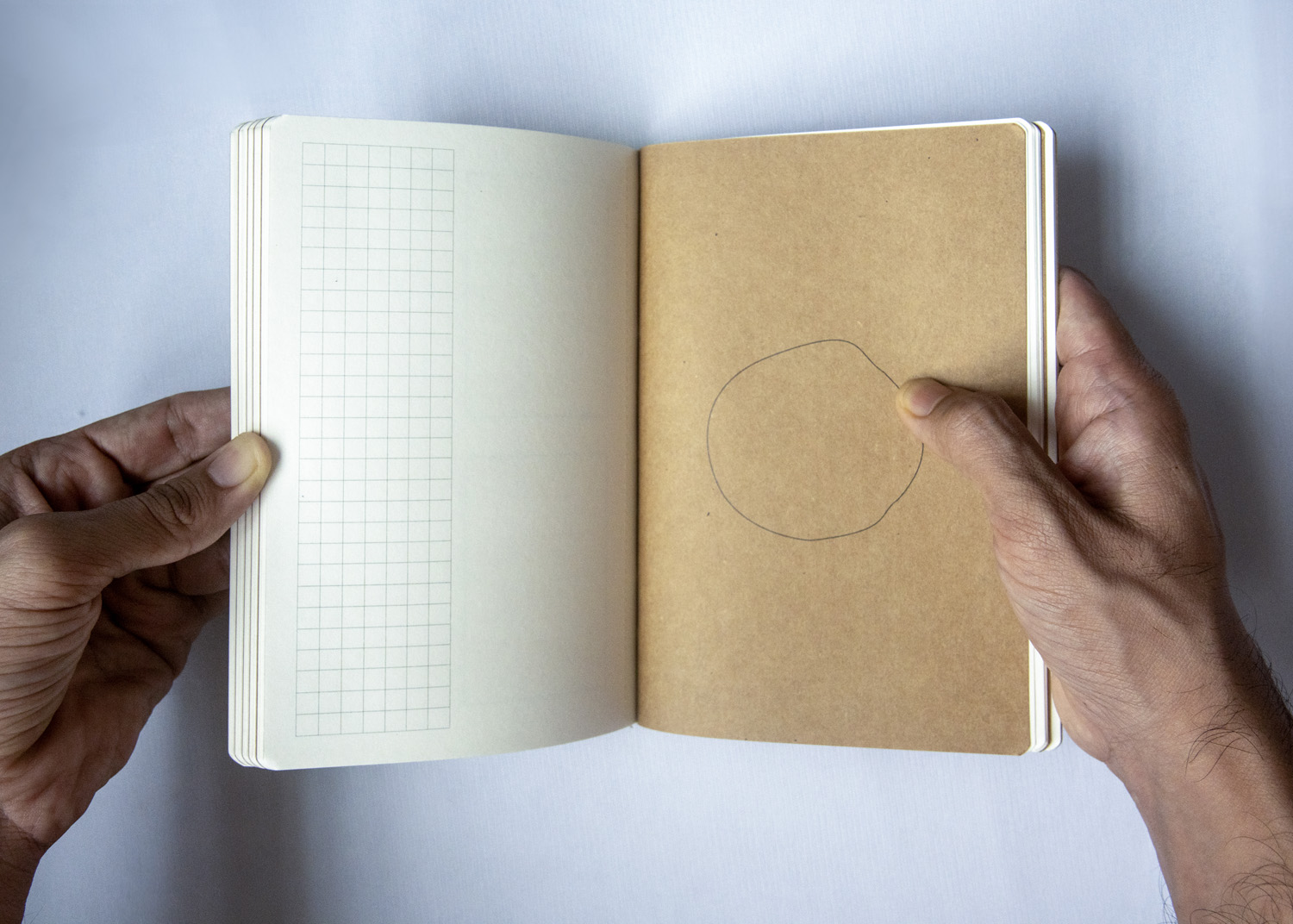
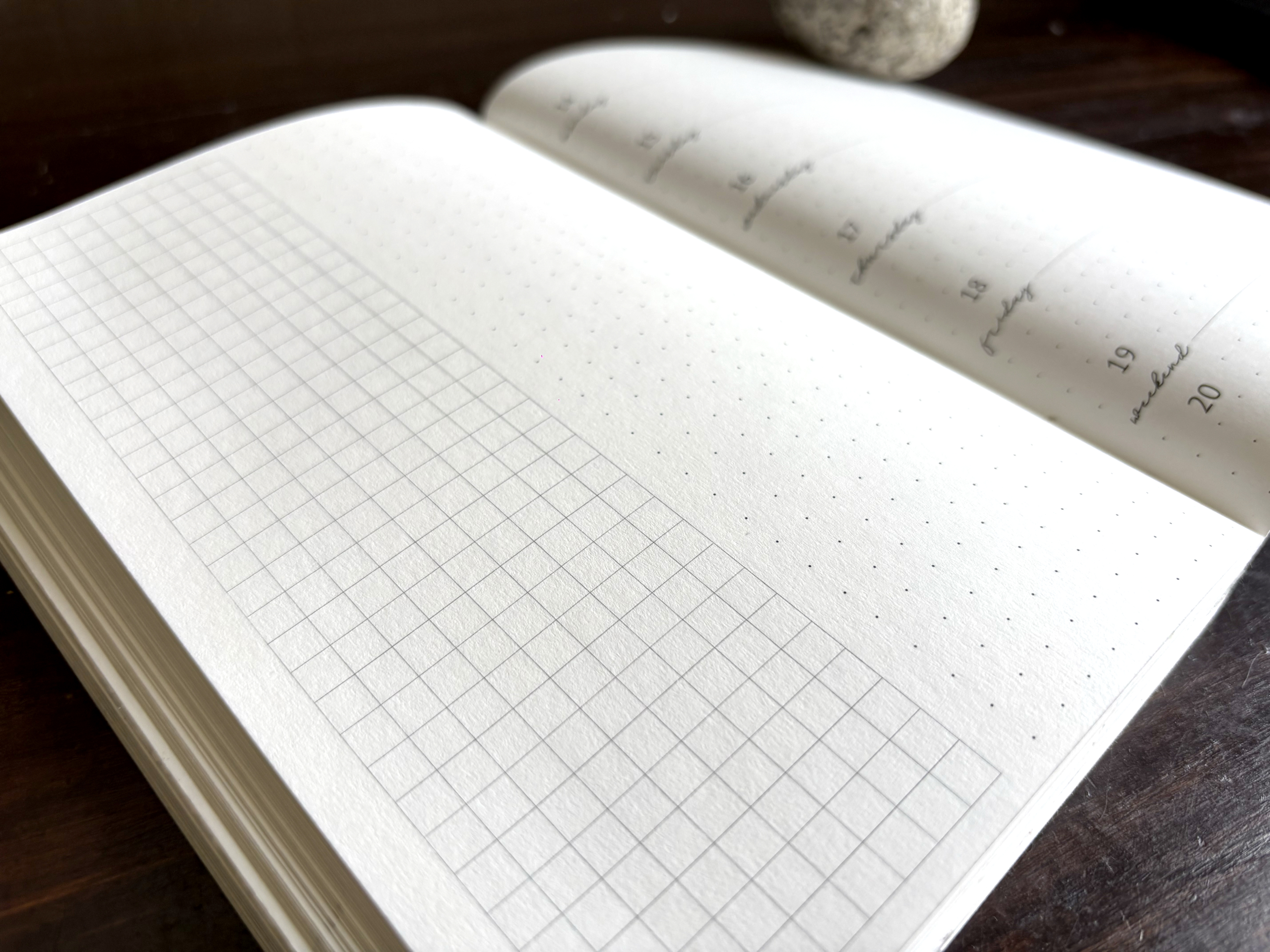
The square grid sits at the more structured end of the spectrum.
Unlike the softer suggestion of a dot grid, its lines are clearly visible. The page is divided into equal spaces, creating a strong sense of order and precision.
That can be incredibly useful when precision is part of what we are doing.
Squares make it easier to create charts, diagrams, tables and carefully measured layouts. They can be helpful when we want things to align or when the geometry of the page matters.
But because the grid is so visible, it becomes part of the page itself.
It doesn’t simply sit quietly in the background. It gives the page a particular character.
That can be exactly right when we want structure to be visible and intentional.
But there are other times when we want structure to be there without becoming the most noticeable thing on the page.
That is where dot grid paper becomes interesting.
Dot grid: structure, quietly offered
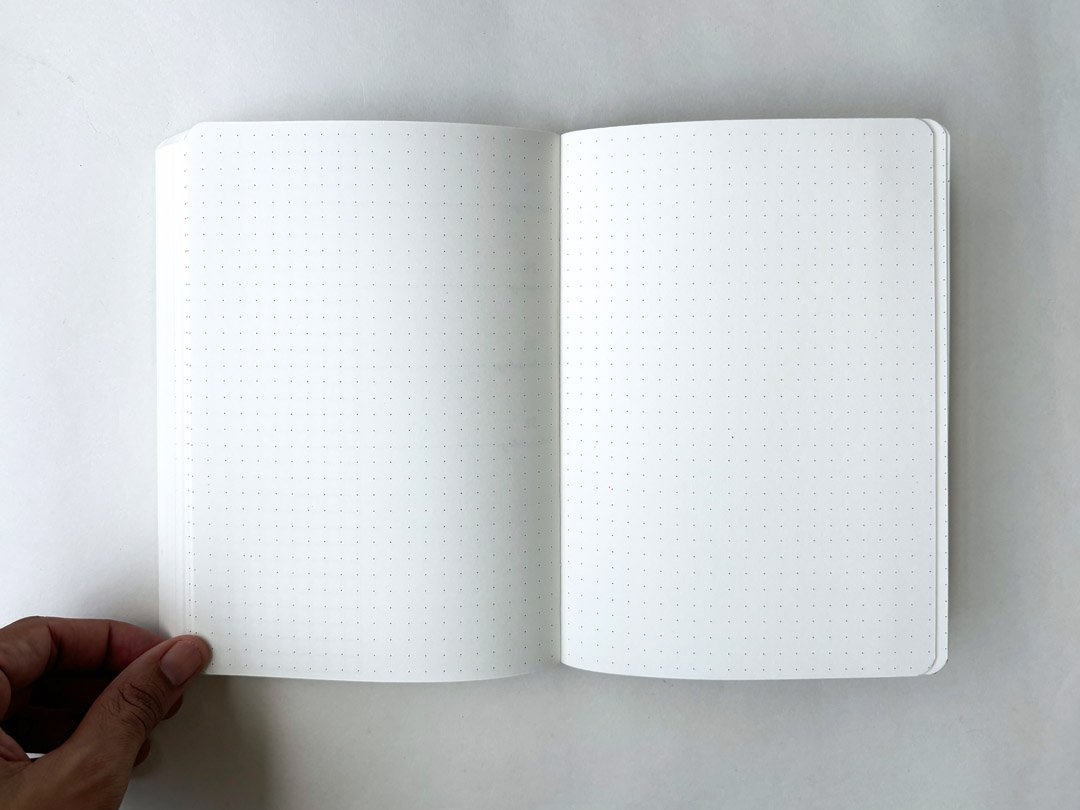
A dot grid sits somewhere between the lined page and the blank page.
The structure exists, but quietly.
Instead of continuous lines, there are small dots placed across the page. They give us reference points without creating obvious boundaries.
At first glance, the page can still feel open.
Start writing, though, and the dots are there if you need them. They can help keep handwriting relatively straight. They can create a margin. They can divide a page into sections. They can help us sketch a simple layout or organise a few ideas.
And then, when we don’t need them, they recede again.
This is what makes the dot grid notebook such a flexible object.
It doesn’t insist that the page is for writing.
It doesn’t insist that it is for planning.
It doesn’t insist that it is for drawing.
The structure is available when we want it. The space remains when we don’t.
There is something particularly gentle about that.
A lined page gives us a direction. A square grid gives us a visible framework. A blank page gives us complete openness.
The dot grid offers a suggestion.
And sometimes a suggestion is enough to help us begin.
Why dot grid gives us room to move
We often think of structure and freedom as opposites.
If something is structured, we assume there must be less room to move. If something is completely open, we imagine that it must offer the most freedom.
But the experience of using a page isn’t always that simple.
A little structure can actually create more freedom because it removes some of the decisions we would otherwise have to make.
We don’t have to wonder whether our writing is going to drift across the page. We don’t have to measure out a rough division before beginning a layout. We don’t have to decide exactly where one section should end and another should begin.
The dots are already there.
They don’t do the work for us. They simply make some possibilities easier.
That distinction matters.
A good structure should support what we want to do without becoming the thing we are doing.
One page, many possibilities
This is perhaps where dot grid paper has its quiet advantage.
The same page can change with us.
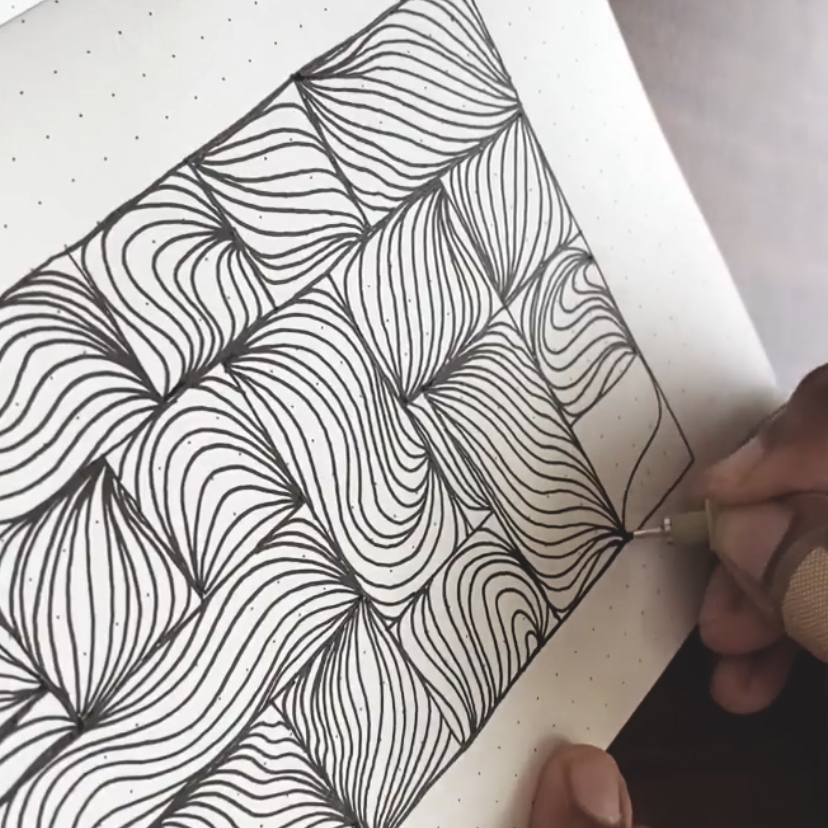
One day, it might hold a few paragraphs of writing. Another day, we might use the space to sketch out an idea. A different page might become a simple weekly plan, while another ends up covered in small drawings and notes.
We don’t need a separate notebook for every version of ourselves.
The page can accommodate the shift.
And there is something freeing about not having to decide in advance what a notebook is going to become.
We might buy a notebook intending to journal and discover that we enjoy using it for ideas. We might begin with lists and slowly start drawing in the margins. We might plan one week carefully and leave the next page almost completely empty.
The notebook doesn’t need to have one identity.
Neither do we.
This is also why a dot grid can work particularly well for people who move between writing, planning and making. The page has enough structure to support each of these things, but not so much that one use excludes another.
It leaves some of the decision-making with us.
Choosing between lined, blank and dot grid
There isn’t really a universal answer.
And perhaps that is the most useful thing to know when choosing between lined, blank, square grid and dot grid paper.
If you love writing and want the page to help you settle into a rhythm, lined paper may feel natural. There is comfort in its familiarity, and sometimes the simplest structure is exactly what we need.
If you want complete openness, blank paper can be wonderful. It gives your thoughts, sketches and ideas nowhere specific to go — which means they can go anywhere.
If you work with precision or enjoy visible structure, a square grid can give the page a clear framework.
And if you find yourself moving between different kinds of work, dot grid offers something a little different.
It doesn’t ask you to decide what the page is for before you begin.
You can write within it without feeling boxed in. You can plan without having to draw every boundary yourself. You can sketch without first having to clear away a set of lines.
It gives you a starting point without deciding the destination.
Perhaps the real question is what we want the page to leave room for
When choosing a notebook, we often ask practical questions.
What will I use it for? How many pages does it have? What size do I need? Do I want lined or blank paper?
All useful questions.
But there is another one we might ask.
What do I want this page to make possible?
If we want somewhere to write, lines may be enough.
If we want the freedom to begin anywhere, perhaps blank is right.
If we need precision, a square grid has its place.
But if we don’t always know what the page will hold — if writing might become planning, planning might become drawing, and a thought might turn into something we hadn’t expected — a dot grid can offer a particularly comfortable middle ground.
Not too much instruction.
Not too little.
Just enough structure to help us begin, with enough space to make the page our own.
And perhaps that is why the dot grid has become such a quietly beloved format.
It doesn’t demand attention.
It simply stays there, ready to help when we need it.
Frequently asked questions
What is dot grid paper?
Dot grid paper has small, evenly spaced dots instead of continuous lines. The dots provide a subtle guide for writing, drawing and creating layouts while keeping the page visually open.
Is dot grid better than lined paper?
Neither is universally better. Lined paper works particularly well for straightforward writing and note-taking, while dot grid offers more flexibility when writing, planning and visual work might share the same page.
What is dot grid paper used for?
Dot grid paper can be used for writing, journaling, planning, sketching, diagrams and other layouts where some alignment is useful without the stronger visual structure of a full grid.
Is a blank notebook better for creativity?
A blank notebook gives the most open space, which can be ideal for sketching and free-form work. But creativity doesn’t always require complete openness; a subtle dot grid can provide a starting point while leaving plenty of room to experiment.
The page doesn’t need to decide for us
There is something fitting about ending with the page itself.
We spend so much of our lives being told what things are for. A notebook should be for this. A planner should be used that way. A particular system should make us more organised, more productive, more consistent.
But perhaps a good notebook doesn’t need to promise any of those things.
Perhaps it can simply be a place to think.
A place to write something down before it disappears.
A place to sketch an idea that isn’t ready yet.
A place to make a plan and then change it.
A place to leave a page empty because nothing needs to go there today.
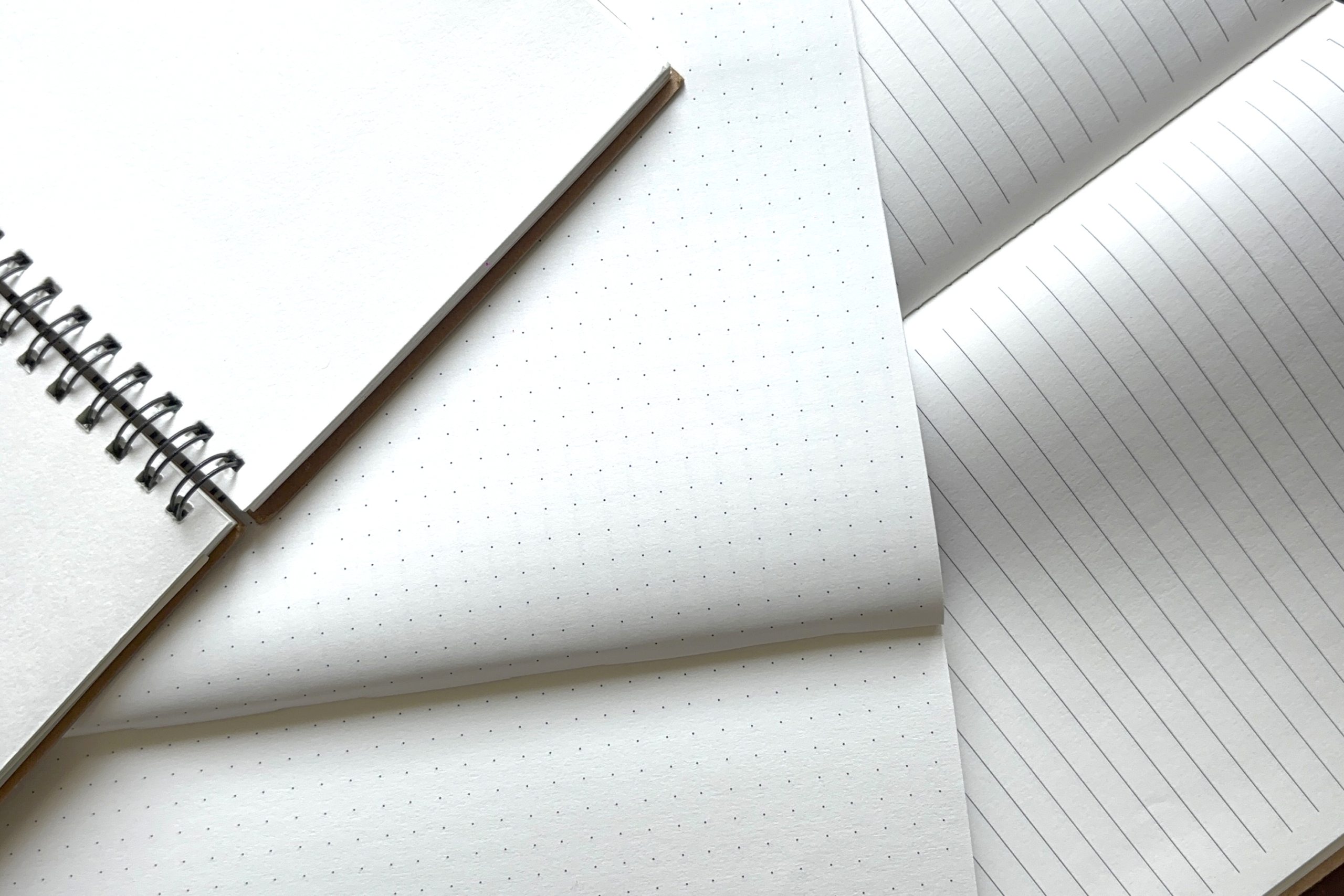
The lines, the squares, the dots and the blank spaces all offer different ways into that experience.
None is the right answer for everyone.
But there is something lovely about a page that gives us enough structure to begin and enough freedom to make it our own.
That, perhaps, is the quiet beauty of dot grid.
Not that it tells us what to do.
But that it leaves room for us to decide.