


Why Rituals Matter More Than Routines

There is something reassuring about a routine.
We like knowing what happens next. Morning routines, evening routines, Sunday routines, work routines — they give shape to days that can otherwise feel scattered. A routine can make life easier because it takes away the need to decide everything from scratch.
But sometimes, even the routines that are supposed to make life simpler begin to feel like another thing to keep up with.
The morning routine that once felt grounding becomes something to complete. The reading habit becomes a number to reach. Exercise becomes a box to tick. Journaling becomes another promise we have made to ourselves and then quietly feel guilty about breaking.
Perhaps rituals vs routines is really a question of how we experience what we are doing.
That is where rituals feel different from routines.
A routine is often about what needs to happen. A ritual is about how we inhabit the moment while it is happening.
The two can look almost identical from the outside. Making tea every morning can be a routine. Making tea slowly, noticing the warmth of the cup, taking a few quiet minutes before the day begins — that can become a ritual.
Reading before bed can be a routine. Reading because the day is finally quiet and there is nowhere else you need to be — that feels more like a ritual.
The action hasn’t changed. Our relationship with it has.
Rituals vs Routines: Why They Feel Different
Routines tend to have an element of completion. We do something, and then we move on to the next thing.
Rituals don’t necessarily ask us to get anywhere.
They create a small pause inside ordinary life — a moment that has meaning because we are present for it. It might last twenty minutes or five. It might happen every day, or only when life allows.
This is perhaps why rituals can feel gentler.
They don’t have to be optimised. They don’t need a perfect schedule or a streak. A ritual can change with us.
And that matters because life is rarely as orderly as the plans and routines we make for ourselves.
Some mornings are rushed. Some evenings disappear into work, family, errands or simply exhaustion. There are days when the things we usually do don’t happen at all.
A routine can feel broken by that.
A ritual can simply wait for us to return.
The things we were taught as children
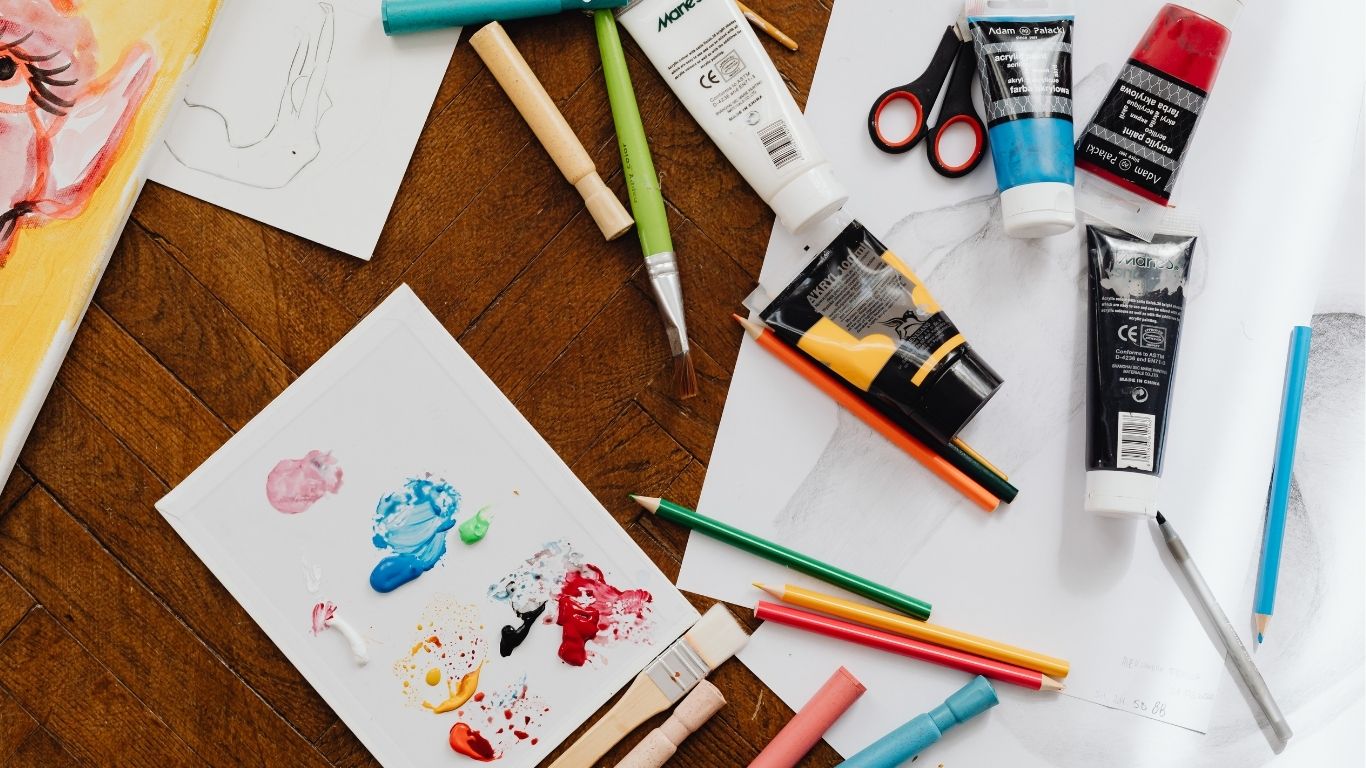
Think about the things many of us loved doing as children.
Reading a book under a blanket. Drawing without knowing what the drawing was supposed to become. Writing stories in notebooks. Making things from scraps of paper. Playing outside until someone called us home. Sitting with a cup of something warm while listening to adults talk.
We weren’t particularly good at any of these things.
We didn’t need to be.
There was no productivity attached to reading. No expectation that drawing should become a skill. No need for our writing to become a finished piece. We did these things because something in us wanted to.
Growing up can change that relationship.
Reading becomes something to finish. Writing becomes something that should be useful. Drawing becomes a creative activity that needs a purpose. Walking becomes exercise. Quiet becomes something we fill.
The things themselves remain, but the pressure around them changes.
Maybe part of adulthood is finding our way back to some of that uncomplicated pleasure — not by becoming children again, but by remembering that not everything we do needs to lead somewhere.
Reading and writing as rituals
Reading is a good example.
There is nothing wrong with reading goals or keeping track of books. For some people, those things are genuinely enjoyable. But reading can also exist without a number attached to it.
A book beside the bed. A chair by a window. Ten quiet pages before sleep. A cup of tea going cold because the chapter was more interesting than expected.
That is a reading ritual.
It isn’t really about how many books we finish. It is about creating a relationship with reading that feels like our own.
Writing can offer the same kind of space.
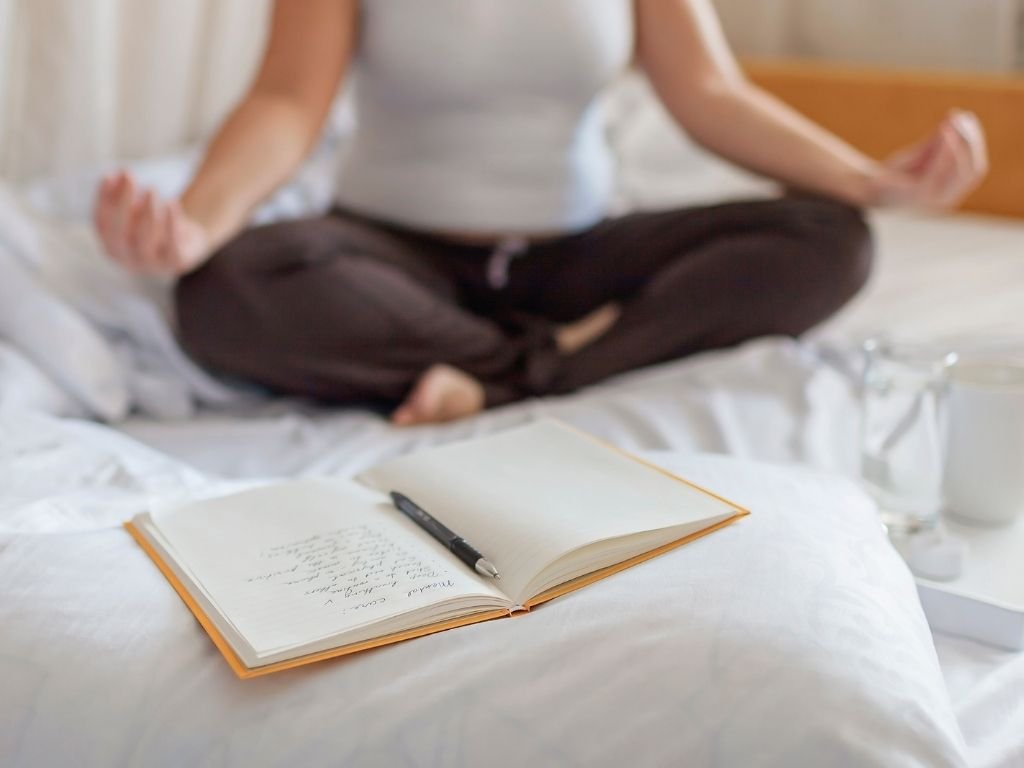
We don’t always need a journaling system or a set of prompts. Sometimes writing means sitting with a blank page and seeing what arrives. A few sentences about the day. A thought that has been circling for weeks. A list of things we don’t want to forget. Something that doesn’t make sense yet.
There is something particular about handwriting in a world where so much of our thinking happens through screens. The physical act slows us down just enough to notice what we are thinking.
A blank page doesn’t ask us to perform.
It simply gives us somewhere to begin.
The simple things that quietly ground us
Some rituals are so ordinary that we barely recognise them as rituals.
Making tea. Cooking a meal from scratch. Watering plants. Walking around the neighbourhood without listening to anything. Sitting on a balcony in the evening. Listening to music while tidying a room. Opening a window after a long day.
None of these activities are remarkable.
That may be precisely why they matter.
A ritual doesn’t have to be special in order to make a moment feel different. Sometimes it is the attention we bring to something familiar that gives it meaning.
Making tea can become a small transition between work and evening. A walk can be a way of moving through the day rather than escaping from it. Cooking can be an opportunity to return to something physical and tangible after hours spent thinking.
These moments give the day texture.
And perhaps we need more texture than efficiency.
Making something, just because
Creativity is often given a job to do.
We are encouraged to paint, draw, photograph, write or make something because it will become a project, a skill, a product, a portfolio or a post.
But there is another kind of creativity that asks for none of that.
A small drawing in the corner of a notebook. A few lines of a Flowtangle. Rearranging flowers in a glass. Making a collage from old paper. Taking photographs on a walk simply because the light looks beautiful. Cooking something without needing to photograph it afterwards.
Making something can be a way of paying attention.
The finished thing doesn’t have to be particularly good. It doesn’t even have to survive.
There is value in doing something with our hands and allowing it to remain small.
Perhaps that is one reason creative rituals can feel so restorative. They return us to the experience of making rather than the pressure of producing.
Taking care of ourselves without turning it into another project
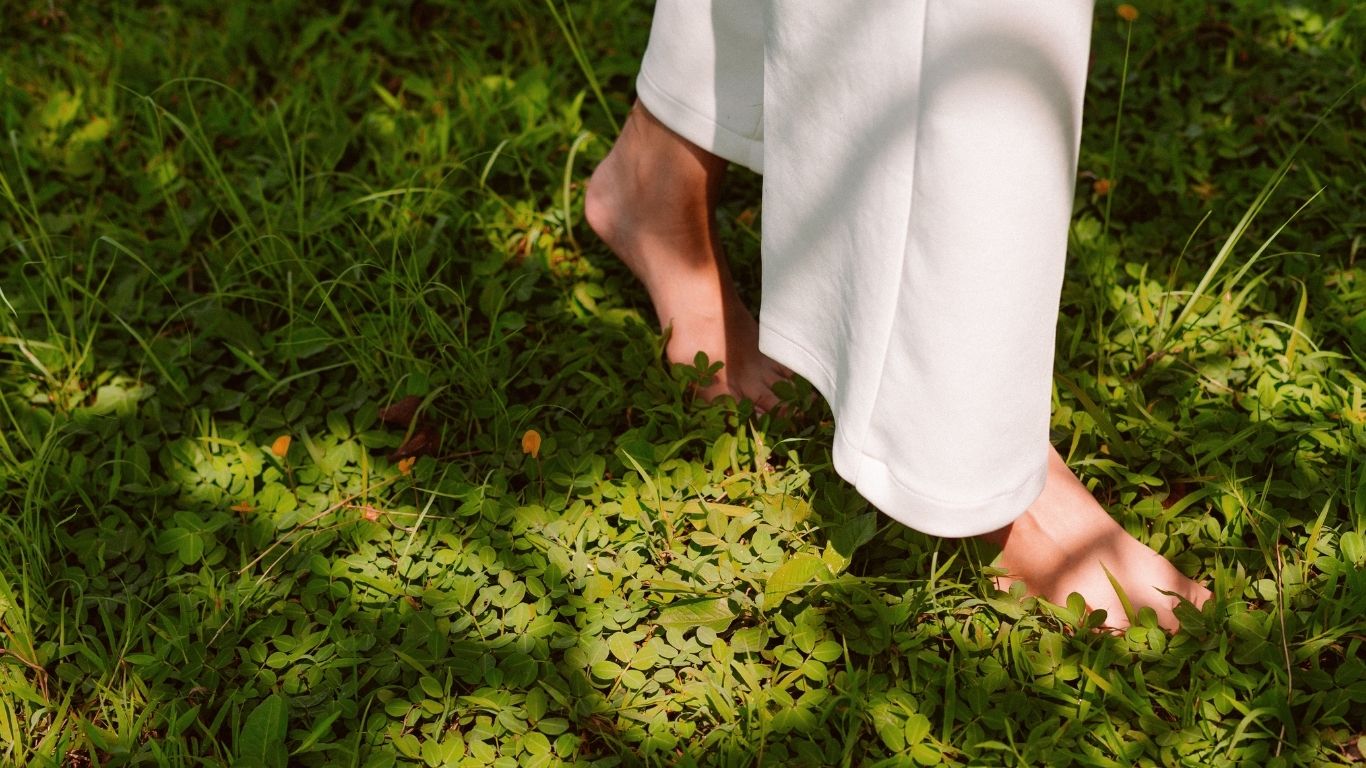
Movement can become a ritual in much the same way.
Exercise is often surrounded by goals: steps, minutes, weights, calories, distances, progress. Those measurements can be useful, but they are not the only reason to move.
Sometimes movement is simply a way of returning to the body.
A walk after sitting for too long. Stretching before bed. A workout that makes us feel stronger. Dancing around the kitchen. Cycling somewhere instead of driving.
The point doesn’t always have to be improvement.
Meditation can also be understood this way. It doesn’t necessarily need to become another practice we perfect. Sometimes it is simply a few minutes of sitting quietly, noticing our breath, or allowing ourselves to be still without immediately reaching for something to fill the silence.
The same applies to rest.
Taking care of ourselves becomes complicated when every act of care turns into a project with rules, targets and expectations.
Rituals can make space for something simpler: this feels good for me, so I want to return to it.
And then there are our screens
It would be strange to talk about modern rituals without talking about screens.
So much of everyday life now happens through them. We read on them, work on them, talk to people through them, learn from them and relax with them.
The answer isn’t necessarily to reject screens completely.
Research increasingly points to a more complicated relationship between screen use and wellbeing. OECD research across 14 countries, including India, found that heavier personal screen use was associated with lower reported wellbeing, while also noting that the relationship is complex and that factors such as sleep, physical activity and loneliness can matter substantially. Purposeful digital engagement can also provide connection and access to information.
Perhaps the more useful question is not simply, How much screen time do I have?
It might be, What does this screen time give me?
There is a difference between endlessly scrolling because we are too tired to choose anything else and deliberately watching a film we have been looking forward to. Between opening an app automatically and listening to a thoughtful conversation that teaches us something. Between consuming more because we are restless and choosing something that genuinely helps us rest.
Even screen time can become intentional.
A documentary after dinner. A language lesson. A favourite podcast while walking. Looking through photographs with someone we love. Learning something we are curious about.
A ritual is not defined by whether an activity is analogue or digital.
It is defined by the attention we bring to it.
When a ritual becomes part of a life

The lovely thing about rituals is that they don’t have to remain fixed.
A ritual can begin because something feels good and gradually become part of the way we live.
Maybe Sunday mornings become a time for reading. Maybe tea marks the end of the working day. Maybe writing becomes something we return to when life feels noisy. Maybe making something with our hands becomes part of an ordinary evening.
And then life changes.
The ritual might change with it.
There is no failure in that.
A ritual can disappear for a while and return months later. It can become shorter. It can happen at a different time. It can be shared with someone else. It can become a seasonal thing.
What makes it a ritual isn’t its consistency.
It is the meaning we give it.
Perhaps this is also why rituals make such thoughtful gifts.
A ritual can be a gift
We often give people things they need.
But sometimes the more memorable gift is something that creates a moment.
A book can become an invitation to slow down. A beautiful notebook can become a place for thoughts that haven’t found words yet. A box of carefully chosen things can create the beginning of an evening ritual, a weekend pause, or a little corner of quiet.
As Dussehra and Diwali approach, there is something especially lovely about giving a gift that doesn’t ask the recipient to become someone else.
The Reader’s Box can be thought of in exactly this way.
Not as a productivity tool. Not as something that needs to be used correctly. But as an invitation into a reading ritual — a little space to put the phone aside, open a book, settle somewhere comfortable and spend some time with words.
It can be gifted to someone who already loves reading, or to someone who perhaps needs a gentle reason to return to it.
The beauty is that there is no prescribed way to use it.
The recipient can make it their own.
And perhaps that is what makes a ritual such a meaningful gift: we aren’t really giving someone a habit. We are giving them the possibility of a moment they might want to return to.
Maybe we don’t need more routines
 There is, of course, nothing wrong with routines.
They help us get through ordinary life. They make difficult things easier. They give structure to mornings, workdays and evenings.
But routines are not the whole story.
There are also the small moments that make a day feel like it belonged to us.
The cup of tea we actually tasted. The few pages we read without checking how many were left. The sentence we wrote by hand. The walk where we noticed the sky. The drawing that went nowhere. The meal we cooked slowly. The music we listened to all the way through. The few quiet minutes when we didn’t need to achieve anything.
These moments may not look significant from the outside.
But a life is made of them.
Maybe rituals matter because they remind us that living well isn’t only about organising our time. It is also about noticing it.
Routines help us move through life.
Rituals help us inhabit it.